
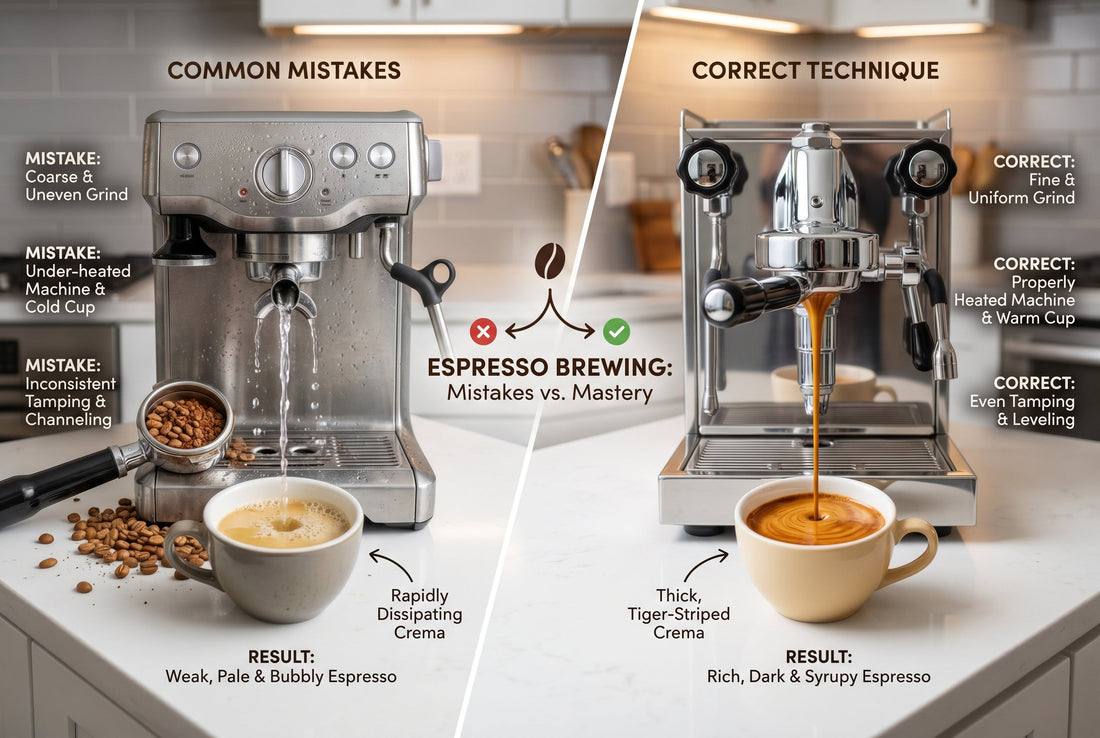
Espresso Brewing Tips: 7 Mistakes Indian Beginners Make

- Why Does Your Home Espresso Taste Bad?
- Mistake 1: Using Instant Coffee in an Espresso Machine
- Mistake 2: Grinding Too Fine for a Pressurized Portafilter
- Mistake 3: Not Preheating the Machine
- Mistake 4: Filling the Tank With Hot Water
- Mistake 5: Skipping Descaling in Hard Water Areas
- Mistake 6: Expecting a Latte Without a Frother
- Mistake 7: Using Stale Pre-Ground Coffee
- Quick-Fix Checklist for Better Espresso
- Frequently Asked Questions
Why Does Your Home Espresso Taste Bad?
Home espresso tastes bad because of seven common mistakes that Indian beginners make. These include using instant coffee, wrong grind size, cold machines, hot water in the tank, skipping descaling, expecting milk drinks without a frother, and stale pre-ground coffee. Fix all seven and your espresso improves overnight.
I have tested the InstaCuppa 3-in-1 Espresso Coffee Maker for over a year. I made every mistake on this list at least once. These espresso brewing tips come from real experience, not theory. Every fix is something you can do today without buying new equipment.
Mistake 1: Using Instant Coffee in an Espresso Machine
Instant coffee does not work in espresso machines. Instant coffee is pre-brewed, dried, and processed into a soluble powder. It dissolves in water instead of being extracted under pressure. Putting instant coffee in a portafilter clogs the basket, produces no crema, and can damage your machine over time.
This is the most common mistake Indian beginners make. India is an instant coffee market. Brands like Nescafe and Bru are household names. So when someone buys their first espresso machine, they reach for what they already have in the kitchen.
The fix: Use ground coffee labeled "espresso" or "fine grind." Or use Nespresso Original capsules or Dolce Gusto pods. The 3-in-1 accepts all three formats. If you want ground coffee, start with brands like Blue Tokai, Sleepy Owl, or Cothas that sell espresso-labeled bags.
Mistake 2: Grinding Too Fine for a Pressurized Portafilter
A pressurized portafilter has a built-in valve that creates the pressure for you. If you grind too fine, the valve plus the fine grind together choke the machine. Water cannot pass through. The shot either drips out painfully slow or does not come out at all. The machine strains and overheats.
Most espresso machines under Rs 15,000 in India use pressurized portafilters. This includes the InstaCuppa 3-in-1. A pressurized basket needs a medium-fine grind, not the super-fine powder that professional unpressurized machines use.
The fix: If you grind at home, set your grinder to medium-fine (like table salt, not like flour). If you buy pre-ground, look for bags that say "espresso" but avoid anything labeled "Turkish" or "extra fine." When in doubt, use capsules. They have the perfect grind built in.
Mistake 3: Not Preheating the Machine
A cold espresso machine pulls sour, under-extracted shots. The group head, portafilter, and internal boiler need 2 to 3 minutes to reach the right temperature. Most beginners turn on the machine and immediately pull a shot. The water hits the coffee at 70°C instead of the ideal 90 to 96°C.
Extraction temperature fact: Espresso extracts best between 90°C and 96°C. Below 85°C, you get sour, acidic flavors because the acids extract first and the sugars and oils stay behind — Specialty Coffee Association guidelines.
The fix: Turn on your machine. Wait for the ready light. Then run a blank shot (water only, no coffee) through the group head. This heats the portafilter and flushes cold water from the system. Now pull your real shot. The difference in taste is dramatic.
Mistake 4: Filling the Tank With Hot Water
Some beginners fill the water tank with hot water from a kettle, thinking it will speed up the machine. This actually causes problems. Hot water in the tank can confuse the machine's thermostat, overshoot the target temperature, and produce burnt, bitter espresso. It can also damage plastic tank components over time.
The fix: Always use cold, filtered water. The machine's internal boiler is designed to heat cold water to the right temperature. Let it do its job. If you want faster startup, just turn on the machine 3 minutes before you need it.
Mistake 5: Skipping Descaling in Hard Water Areas
Indian tap water is hard in most cities. Delhi, Bangalore, Chennai, and Mumbai all have water hardness levels between 150 and 500 ppm. Hard water deposits calcium and mineral scale inside your espresso machine. Within 2 to 3 months, this scale blocks water flow, reduces temperature accuracy, and makes your espresso taste chalky and flat.
Indian hard water fact: Water hardness in major Indian cities ranges from 150 to 500 ppm. The Bureau of Indian Standards recommends a maximum of 200 ppm for drinking water. Espresso machines perform best below 100 ppm — BIS IS 10500:2012.
The fix: Descale your machine every 4 to 6 weeks if you use tap water. Use citric acid (food grade, Rs 100 for 500g on Amazon) dissolved in water. Run the solution through the machine, then flush with 2 to 3 tanks of clean water. Better yet, use filtered or RO water from the start.
Mistake 6: Expecting a Latte Without a Frother
Many buyers expect their espresso machine to make lattes and cappuccinos out of the box. But most budget machines in India do not have a steam wand. The InstaCuppa 3-in-1 is one example. It pulls excellent espresso but has no steam wand. Without frothed milk, you cannot make a latte or cappuccino.
The fix: Buy a separate milk frother. A handheld battery frother costs Rs 699. The InstaCuppa 4-in-1 Electric Milk Frother (Rs 4,199) heats and froths milk in one step. A French press also works in a pinch. Read our full guide on making lattes without a steam wand.
Mistake 7: Using Stale Pre-Ground Coffee
Coffee starts losing flavor within 15 minutes of grinding. Pre-ground coffee from the supermarket has been sitting on shelves for weeks or months. By the time you brew it, most of the volatile compounds that create aroma and flavor are gone. Your espresso tastes flat and lifeless.
The fix: Three options, ranked from best to easiest:
- Grind fresh. Buy whole beans and grind before each shot. A basic burr grinder costs Rs 2,500 to Rs 5,000. This gives the best flavor by far.
- Use capsules. Nespresso and Dolce Gusto capsules are sealed at roasting. They stay fresh for 6 to 12 months. Convenience plus decent flavor.
- Buy small bags. If you use pre-ground, buy 100g bags and finish them within 7 to 10 days. Store in an airtight container away from light and heat.
Quick-Fix Checklist for Better Espresso
Here are all seven fixes in one place. Print this or save it on your phone. Go through the list once and your espresso will taste noticeably better from the very next cup.
| # | Mistake | Fix | Cost |
|---|---|---|---|
| 1 | Instant coffee | Use espresso-ground or capsules | Rs 0 (just switch) |
| 2 | Too fine grind | Medium-fine for pressurized PF | Rs 0 (adjust grinder) |
| 3 | Cold machine | Preheat 2-3 min + blank shot | Rs 0 |
| 4 | Hot water in tank | Use cold filtered water only | Rs 0 |
| 5 | No descaling | Citric acid every 4-6 weeks | Rs 100/year |
| 6 | No frother for lattes | Buy a milk frother | Rs 699-4,199 |
| 7 | Stale pre-ground | Grind fresh, capsules, or small bags | Rs 0-5,000 |
Frequently Asked Questions
Can I use filter coffee powder in an espresso machine?
South Indian filter coffee powder (like Bru or Leo) is usually too coarse for espresso. It can work in a pressurized portafilter but the flavor will be weak and watery. Use coffee labeled "espresso grind" for better results.
How often should I clean my espresso machine?
Rinse the portafilter and drip tray after every use. Wipe the group head with a damp cloth daily. Descale every 4 to 6 weeks with citric acid if you use tap water. Deep clean all removable parts once a month.
Why is my espresso shot too fast (under 15 seconds)?
A shot under 15 seconds means the grind is too coarse or you used too little coffee. Increase the dose to 7 to 9 grams and make the grind slightly finer. Also check that you are tamping evenly. An uneven tamp creates channels where water rushes through.
Is RO water safe for espresso machines?
RO water is safe and actually ideal for espresso machines. It has very low mineral content so it prevents scale buildup. Some purists argue that zero-mineral water makes flat-tasting espresso. A simple fix is to add a pinch of mineral salt per liter of RO water.
Do I need a 20-bar machine for good espresso?
No. Espresso extracts at 9 bars. A 20-bar pump generates 20 bars at the pump but an internal valve reduces it to 9 bars at the group head. The 20-bar number is a marketing spec, not a quality indicator. Read our detailed breakdown of 20 bar vs 9 bar espresso.

